Expertise provided by Javier Verdin, Clinical Director and Ben Dobbs, CEO
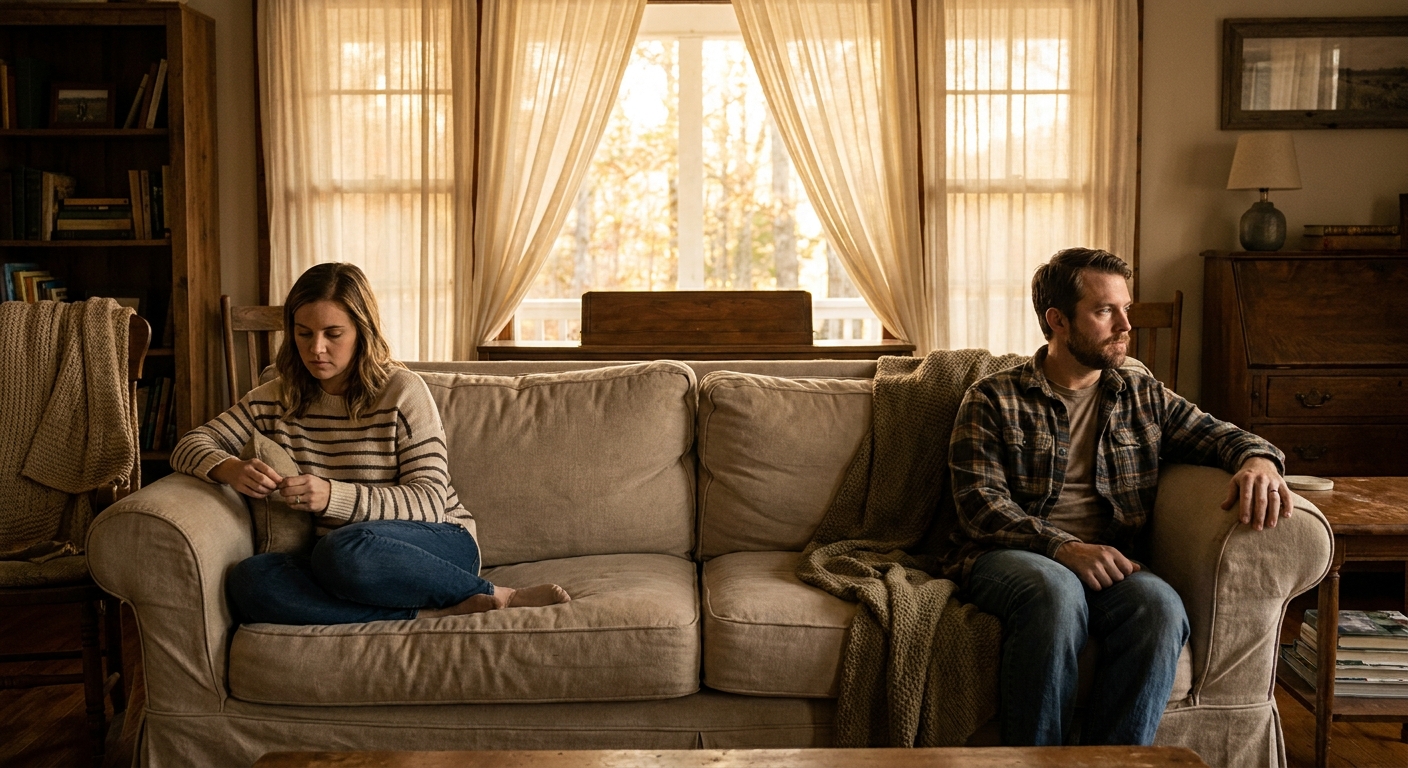
You have learned to read their face before you say good morning. The wrong tone or timing can turn the whole day from tender to frightening, and you may have started to believe that love means absorbing every wave of emotion without complaint or limits. If that lands hard, T.R.U.E. Addiction & BH wants you to know what you are living through is real. Relationships with borderline personality disorder can feel like this from the inside: deep closeness one hour, accusations the next, and constant effort on your part to keep the peace.
This guide from T.R.U.E. Addiction & BH, an addiction and behavioral health treatment program in Murfreesboro, Tennessee, is for the spouse or partner doing the research, often late at night, while the person you love is asleep or not speaking to you. It explains what borderline personality disorder (BPD) is, why trauma often sits underneath it, and how Dialectical Behavior Therapy works. It also explains how you can be part of care without being blamed for the problem. The practical side matters too. T.R.U.E. accepts Aetna, Cigna, UnitedHealthcare, BlueCross BlueShield, Anthem, and Tricare, and the team checks your partner’s benefits on the first call, so your cost questions get real answers before anyone commits to anything.
You can love someone with BPD and still protect yourself. Those two things do not cancel each other out, and the right care can support both.
What Does Borderline Personality Disorder Look Like Inside a Relationship?
Inside a relationship, borderline personality disorder usually shows up in three ways. Your partner may have an intense fear of being left, they may swing quickly between seeing you as wonderful and seeing you as the enemy, and their emotions can rise faster and last longer than the moment seems to call for. These patterns come from a recognized mental health condition, not from a failure in your love.
The National Institute of Mental Health describes BPD as a mental illness that affects a person’s ability to manage their emotions. That struggle can show up most clearly with the people closest to them. Partners often say the hardest part is not one big fight but how unpredictable everything feels. A text that arrives ten minutes late, a tired look, or plans with a friend can feel to your partner like proof that you are pulling away. To your partner, that fear can feel real and urgent, even when nothing has changed on your side.
Clinicians diagnose BPD using the American Psychiatric Association’s DSM-5-TR. The manual lists nine criteria, and a person must show at least five of them as a long-standing pattern, not just during one rough season. Here is how each criterion may show up at home:
| DSM-5-TR criterion | What it may look like in your relationship |
|---|---|
| Frantic efforts to avoid real or imagined abandonment | Repeated calls when you are away, panic when you mention needing space |
| Unstable, intense relationships that swing between idealization and devaluation (splitting) | You are “the only one who understands me” at breakfast and “just like everyone else” by dinner |
| Identity disturbance | Shifting goals, values, or sense of self |
| Impulsivity in at least two self-damaging areas | Sudden spending, reckless driving, binge drinking or drug use, risky sex |
| Recurrent suicidal behavior, threats, or self-harm | Talk of not wanting to live, or self-injury, sometimes after conflict |
| Affective instability | Moods that can shift within hours, set off by small events |
| Chronic feelings of emptiness | Describing themselves as hollow even when life is calm |
| Intense or inappropriate anger | Rage that can feel out of scale, sometimes followed by shame and apology |
| Transient stress-related paranoia or dissociation | Feeling unreal or “checked out,” or suspecting you are against them during high stress |
Splitting is often the pattern that confuses partners most. A person with BPD may struggle to hold good and bad feelings about the same person at the same time, so when you disappoint them, the good you have done can seem to vanish from their memory for a while. You did not become a different person between breakfast and dinner. Their view of you swung, and it can swing back just as fast, which is why an apology can be heartfelt and the next blowup can still come.
The person you love is not the diagnosis, and the criteria describe patterns, not character. If your partner ever talks about suicide or hurts themselves, take it seriously every time. Call or text 988, the Suicide & Crisis Lifeline, or call 911 if anyone is in immediate danger, including you.
Why Does Unresolved Trauma Often Sit Underneath Borderline Personality Disorder?
Many people living with BPD carry a history of abuse or other trauma, and that history can fuel the abandonment fear and emotional storms their partners face every day. T.R.U.E. Addiction & BH in Murfreesboro builds trauma resolution into BPD care because both clinical observation and the program’s own intake patterns show the same connection.
At T.R.U.E., the clinical team sees this pattern in their Murfreesboro clients week after week. During intake assessments, therapists ask about childhood experiences, past relationships, and any history of abuse or neglect. In the majority of BPD cases that come through the program, those questions uncover something: sexual abuse before age twelve, physical violence from a caregiver, emotional abandonment, or witnessing domestic violence. During prescreens and initial assessments, therapists frequently uncover histories of abuse, neglect, or other trauma among clients diagnosed with BPD, which is why accessible care for this population has to start with understanding where each client has been. That consistent finding is why T.R.U.E. makes trauma-informed care a standard part of the BPD treatment plan, not an optional add-on.
This matters for you because it changes what the fights might actually be about. When your partner explodes over a late text, the reaction can be bigger than the text, because an old alarm, set long before you met, may be going off. A comprehensive literature review of BPD describes the condition as developing from a mix of genetic, biological, and environmental factors, with early adversity among them. Knowing this will not make the hard moments painless, but it can help you stop asking what you did wrong and start asking what your partner’s reaction might be trying to protect.
Two truths can sit side by side here. Not every person with BPD has a trauma history, so a careful assessment matters more than any assumption. Trauma also explains behavior without excusing harm to you. In T.R.U.E.’s experience, care that only manages surface behaviors and never touches the trauma underneath can leave a couple stuck in the same cycle. That is why trauma resolution, paced carefully, becomes part of the plan when the severity calls for it.
How Does Dialectical Behavior Therapy Help Address the Emotional Whiplash?
Understanding where the pain comes from is the first step. The next is learning what to do with it. Dialectical Behavior Therapy (DBT) teaches four skill sets: mindfulness, distress tolerance, emotion regulation, and interpersonal effectiveness. Together, these can help a person with BPD slow down emotional reactions and handle relationships with less chaos. At T.R.U.E. Addiction & BH in Murfreesboro, DBT is delivered through skills groups and individual DBT sessions.
Psychologist Dr. Marsha Linehan developed DBT, and the National Institute of Mental Health notes that it was created specifically for people with BPD. Each of the four modules targets something you have likely seen at home:
| DBT module | What your partner practices | What you may notice over time |
|---|---|---|
| Mindfulness | Noticing feelings without acting on them right away | A pause before the reaction |
| Distress tolerance | Getting through a crisis moment without making it worse | Less frequent late-night spirals |
| Emotion regulation | Naming emotions and lowering their intensity | Moods that may settle sooner |
| Interpersonal effectiveness | Asking for needs and handling conflict without attack | More requests, fewer accusations |
The order of care matters. T.R.U.E.’s clinical team teaches grounding techniques and emotion regulation skills first, so the person with BPD has a stable floor to stand on. Once those skills are understood and actually used in daily life, the therapist may bring the spouse or partner in, case by case and only with the client’s consent. In those sessions, you can learn how to respond when your loved one splits between idealizing and devaluing you, so you are no longer guessing in the middle of a storm. DBT sits alongside other approaches T.R.U.E. uses, including Cognitive Behavioral Therapy (CBT), Rational Emotive Behavior Therapy (REBT), motivational interviewing, solution-focused therapy, and trauma-informed care.
Picture an ordinary evening. You text that you will be home an hour late. Before skills practice, that message might set off a flood of calls, accusations, and a fight that lasts until midnight. After weeks of practicing distress tolerance, your partner may notice the panic rising, use a grounding skill, and send one message instead of twenty. That change will not be perfect or permanent on the first try, and progress looks different for every person, yet some partners say that even a few calmer evenings like this can make the whole house feel different.
What Changes When BPD Comes With Addiction or Another Mental Health Condition?
For many couples, BPD is not the only thing in the room. When it shows up alongside other disorders such as substance use disorder, depression, anxiety, PTSD, or ADHD, the conditions can feed each other, and treating them in separate programs can leave you, the partner, stuck coordinating between teams. T.R.U.E. Addiction & BH treats co-occurring BPD and substance use disorder together under one Murfreesboro clinical team, so one plan covers both.
The literature review on BPD notes that the condition frequently occurs alongside other mental health and substance use conditions. The connection makes sense from the inside. Alcohol or drugs can quiet unbearable feelings for a few hours, which is why many people with BPD reach for them, but when the substance wears off, those feelings often come back stronger. If one program addresses the drinking while another addresses the emotions, the person may be left in the gap with no skills for what surfaces.
Many partners know that gap well. One provider says the substance use has to stop before mood work can begin, while another will not take your partner until the mental health symptoms settle. You end up carrying two schedules, two sets of instructions, and two treatment teams who may never speak to each other. At T.R.U.E. Addiction & BH in Murfreesboro, dual diagnosis care means one team uses data and research to match the therapy to the diagnosis and the problems your partner is facing right now. Medication-assisted treatment (MAT) is part of T.R.U.E.’s services when it fits the person’s substance use. This is what comprehensive treatment looks like in practice: one plan and one team, with fewer phone calls for you.
The level of care depends on a prescreen assessment that evaluates medical needs, withdrawal risk, mental health severity, and living environment. Based on those answers, the T.R.U.E. Addiction & BH team recommends a Partial Hospitalization Program (PHP) or Intensive Outpatient Program (IOP). If withdrawal risk is a concern, the prescreen is where that comes up, so the safest starting point is chosen before anything else happens.
Self-Worth Skills Help the Person With BPD and the Partner
Skills like DBT can help calm the storm, but lasting change can also depend on how each person sees themselves. At T.R.U.E., therapists use the concepts of forgiveness, grace, and self-worth in sessions with BPD clients who carry histories of abuse or neglect, helping them understand that past harm does not define who they are now. That same framework can also help a partner who has spent years absorbing blame learn to stand steady again.
In group and individual sessions at T.R.U.E., therapists guide clients through exercises that separate what happened to them from their value as a person. One client described it as the first time anyone asked her to say out loud that the abuse was not her fault and that she deserved better, even when her emotions told her otherwise. This describes one client’s experience during her treatment at T.R.U.E. Individual experiences with self-worth work vary, and this reflects her personal pathway to recovery, not a typical or expected result for every client. For a person with BPD, that shift can soften the deep shame that often sits under the rage. When someone stops believing they are fundamentally unlovable, they may have less reason to test whether you will leave.
The same work applies to you. After enough fights, many partners start apologizing for things they did not do, doubting their own memory, and feeling guilty for wanting time alone. Your sense of self may have worn down so slowly that you did not notice. Clinical guidance supports getting help for yourself, too. Treatment guidance for BPD published through the National Library of Medicine recommends that families and carers receive information and support of their own. Family education programs, such as the Family-to-Family course from the National Alliance on Mental Illness, exist because relatives can benefit from real skills to respond without enabling harmful behavior or making the conflict worse.
Grace does not mean having no limits, and a boundary can be warm and firm at the same time. For example: “I love you, and I am not leaving. I am going to step outside for twenty minutes, and I will come back when we can both talk calmly.” That sentence can address the abandonment fear while still protecting you. Learning to say it, and mean it without guilt, is exactly the kind of skill that family involvement at T.R.U.E. aims to build.
When Will You Be Invited Into Treatment, and How Does T.R.U.E. Protect You Both?
If you are wondering when you get a seat at the table, the answer depends on timing and consent. T.R.U.E. Addiction & BH brings a spouse or partner into BPD treatment case by case. This usually happens after the person with BPD has built grounding and emotion regulation skills, and only when the client consents and the partner is willing and able. That timing aims to protect your partner’s progress and keep you from walking into a session before either of you is ready.
Involvement can take two forms. In a family session, you and your partner meet together with the T.R.U.E. Addiction & BH therapist. In a one-on-one session, you meet with the therapist alone to learn about BPD, ask your questions, and practice how to respond during splitting episodes. Some partners start with one-on-one sessions because they need room to say what the last few years have been like without worrying about setting off a fight.
Consent matters for a clinical reason as well as a legal one. A person with BPD who feels outnumbered or exposed may experience a joint session as betrayal, which is the very fear treatment is trying to quiet. Waiting until your partner has some skills and agrees to include you can make it more likely that the session builds trust instead of breaking it. Privacy laws also generally prevent the clinical team from sharing treatment details with you, even as a spouse, without your partner’s written permission. If you get fewer updates than you hoped for early on, the team is not shutting you out. It is following the rules that protect your partner’s care.
You may be afraid that in that room, you will be the one blamed. That fear makes sense, especially if you have been told for years that everything is your fault. Family sessions at T.R.U.E. are meant to educate and equip you, not to put you on trial. You can learn how to validate your partner’s feelings without agreeing with every accusation and how to hold a boundary when the moment heats up, with the goal of a relationship where both people feel safer.
Trauma Work Waits Until the Coping Skills Can Hold the Weight
Because trauma sits under so much of this, you might expect deep trauma therapy to start right away. T.R.U.E. Addiction & BH does not use Eye Movement Desensitization and Reprocessing (EMDR) during Partial Hospitalization or Intensive Outpatient treatment. Instead, the team may recommend it as a next step during aftercare, once the person has built coping and prevention skills, because processing trauma memories too early can destabilize both the person and the relationship.
Think of it like this: asking someone to revisit their worst memories before they can calm their own body is like opening the floodgates before the levees are built. For a person with BPD, a flood of old pain without grounding skills can mean more crises at home, not fewer. That is why T.R.U.E.’s clinical team puts emotion regulation and grounding first and lets the deeper reprocessing wait until those skills can carry the weight.
Trauma is still part of the work during active treatment at T.R.U.E. Addiction & BH. Trauma resolution and trauma-informed care help your partner understand how past experiences can shape today’s reactions. They learn to recognize their triggers, build a sense of safety in the present, and practice prevention skills meant for long-term use after the program ends. The team adjusts how much trauma focus is included based on how severe the person’s symptoms are.
You might wonder why your partner is not “getting to the root of it” right away. The root work may go better on stable ground. If your partner comes home from a session tired or quiet, that can be a normal part of doing hard work in a safe order. When the skills are in place, the team can talk with your partner about whether trauma-focused therapy such as EMDR makes sense as an aftercare recommendation.
What Will the First Phone Call to T.R.U.E. Actually Tell You?
All of this starts with one conversation. A call to T.R.U.E. Addiction & BH at (615) 338-6235 begins a prescreen that looks at medical needs, withdrawal risk if substances are involved, mental health severity, and living environment. That assessment helps determine whether PHP, IOP, or outpatient care fits your partner right now, and which family involvement options come with that level.
You do not need to have everything figured out before you call. Many spouses say the hardest part was not knowing who to call or what to say, and the prescreen exists for exactly that reason. The intake team asks the questions, and you answer what you can. If you are not sure whether your partner has BPD, a substance use problem, or both, say so. Sorting that out is part of the team’s job, not yours.
The levels of care at T.R.U.E. Addiction & BH differ in intensity. A Partial Hospitalization Program is the most structured, with treatment for most of the day on program days. An Intensive Outpatient Program meets several days a week for fewer hours, so many people can keep up parts of daily life, and an Evening IOP option can help when daytime work or family duties make scheduling hard. Outpatient care offers ongoing sessions and aftercare support once someone is more stable. Having several pathways to recovery means the plan can fit your partner’s current needs and shift as those needs change.
A few things make the call easier if you have them nearby:
- Your partner’s insurance card
- A list of current medications
- What substances, if any, are being used, and how recently
- Any recent self-harm, suicidal talk, or safety concerns at home
- Whether your partner knows you are calling
You may also worry about being pressured, or about facing weeks of waiting when things feel urgent now. It is fair to ask the intake team directly how soon an assessment and admission could happen. A first call is a way to get information, and it does not lock you into anything. You can hang up, think it over, and talk with your partner before making any decision.
Can You Afford Care, and What If Your Partner Refuses It?
Two questions tend to follow the first call: how you will pay for care, and what happens if your partner says no. T.R.U.E. Addiction & BH accepts Aetna, Cigna, UnitedHealthcare, BlueCross BlueShield, Anthem, and Tricare, and the team verifies benefits during the prescreen call so you know what to expect before committing. If your partner refuses treatment, your focus shifts to protecting your own safety, setting clear boundaries, and getting support for yourself.
Every insurance plan works a little differently. Deductibles, copays, and prior authorization rules vary, and family sessions or treatment for co-occurring disorders may fall under different parts of a plan. That is why T.R.U.E. checks your partner’s specific benefits instead of guessing. Accessible care starts with a straight answer about cost, and you deserve that answer before you sign anything.
Refusal is common, and it does not mean the door is closed for good. You cannot force an adult into voluntary treatment, and trying to argue someone into care often makes them dig in harder. The National Education Alliance for Borderline Personality Disorder offers family education, including its Family Connections program for relatives of people with BPD. Its guidance urges family members to put their own safety first, set clear limits around behaviors they will not accept, and connect with other families who understand. Keep in mind the difference between a boundary and an ultimatum. A boundary describes what you will do (“If you scream at me, I will leave the room”), while an ultimatum tries to control what your partner does, and boundaries tend to hold up better over time.
Readiness often shows up after a hard moment: a crisis, a scare, or a morning after when your partner admits they cannot keep living this way. Keep T.R.U.E.’s number saved so you are ready when that window opens, and get support for yourself until then. If your partner’s behavior ever puts you or anyone else in danger, call 911. If they talk about suicide, call or text 988.
Questions Spouses and Partners Ask About Relationships With Borderline Personality
Can you stay in a relationship with someone who has borderline personality disorder?
Many couples do stay together. Some find their relationship steadier than it has been in years, especially when the person with BPD engages in evidence-based care like DBT and the partner gets education and support too. Each relationship is different, and no relationship should require you to give up your safety.
How do I stop walking on eggshells with my partner who has BPD?
Walking on eggshells can ease when two things happen together: your partner builds emotion regulation and distress tolerance skills, and you learn validation and boundary skills of your own. At T.R.U.E. Addiction & BH, partners can learn these skills in family sessions or one-on-one sessions with the therapist when the client consents.
Does insurance cover family therapy for borderline personality disorder in Murfreesboro, TN?
T.R.U.E. Addiction & BH in Murfreesboro accepts Aetna, Cigna, UnitedHealthcare, BlueCross BlueShield, Anthem, and Tricare. Because every plan differs, the intake team verifies your partner’s specific benefits during the prescreen call, including how family sessions fit into the treatment plan, before you commit to anything.
What should I do if my partner with BPD refuses treatment?
Focus on your own safety, set clear boundaries around behaviors you will not accept, and connect with family education through national groups that support relatives of people with BPD. Stay open to helping your partner get care when they are ready, and keep the T.R.U.E. number saved for that moment.
Can borderline personality disorder be treated alongside addiction in Murfreesboro?
Yes. T.R.U.E. Addiction & BH in Murfreesboro treats co-occurring borderline personality disorder and substance use disorder together under one clinical team. Care happens at the PHP or IOP level that the prescreen assessment recommends, so you are not coordinating between two separate programs.
How long does DBT treatment for BPD take before I see changes at home?
Some partners notice fewer explosive moments within weeks once the person with BPD starts practicing distress tolerance and emotion regulation skills. Every person moves at a different pace, though, and building those skills fully, then working through trauma in aftercare, can take months.
Relationships with borderline personality can respond to the right support when both people engage, and the first step is smaller than it feels. Call T.R.U.E. Addiction & BH in Murfreesboro at (615) 338-6235 to begin the prescreen process, learn which level of care may match your partner’s current needs, and ask about family involvement options during treatment.
Before you dial, write down the last three times the day turned from tender to frightening. Note what set it off, how long it lasted, and whether alcohol or drugs were involved. That short list gives the prescreen team a clearer picture than any general description could, and it reminds you, in your own handwriting, that what you have been carrying is real and worth getting help for.
You Don’t Have to Figure This Out Alone
Loving someone with borderline personality disorder takes courage, and recognizing when outside support could help takes even more. If you’re wondering whether professional guidance might ease the confusion or conflict in your relationship, a conversation with someone who understands both mental health and relational patterns can offer clarity. T.R.U.E. Addiction & BH in Murfreesboro serves individuals and families working through these challenges every day.
Individual experiences with mental health treatment vary, and no treatment approach guarantees specific relationship or emotional outcomes.